THE METHOD
How Do You Stick to a Habit for a Whole Year?
You stick to a habit for a year with four moves: shrink it to two minutes so there is no excuse, date every rep so a miss is visible on paper, score yourself at the end of every month, and enforce one rule when life happens: miss once, never twice. The streak is not the point. The comeback is.
The two-minute floor
A habit survives in proportion to how small its worst-day version is. Two minutes is small enough to do sick, tired, traveling, or furious. Every book in the 365 series is built on this floor: read the page, do one small mission, say one line out loud.
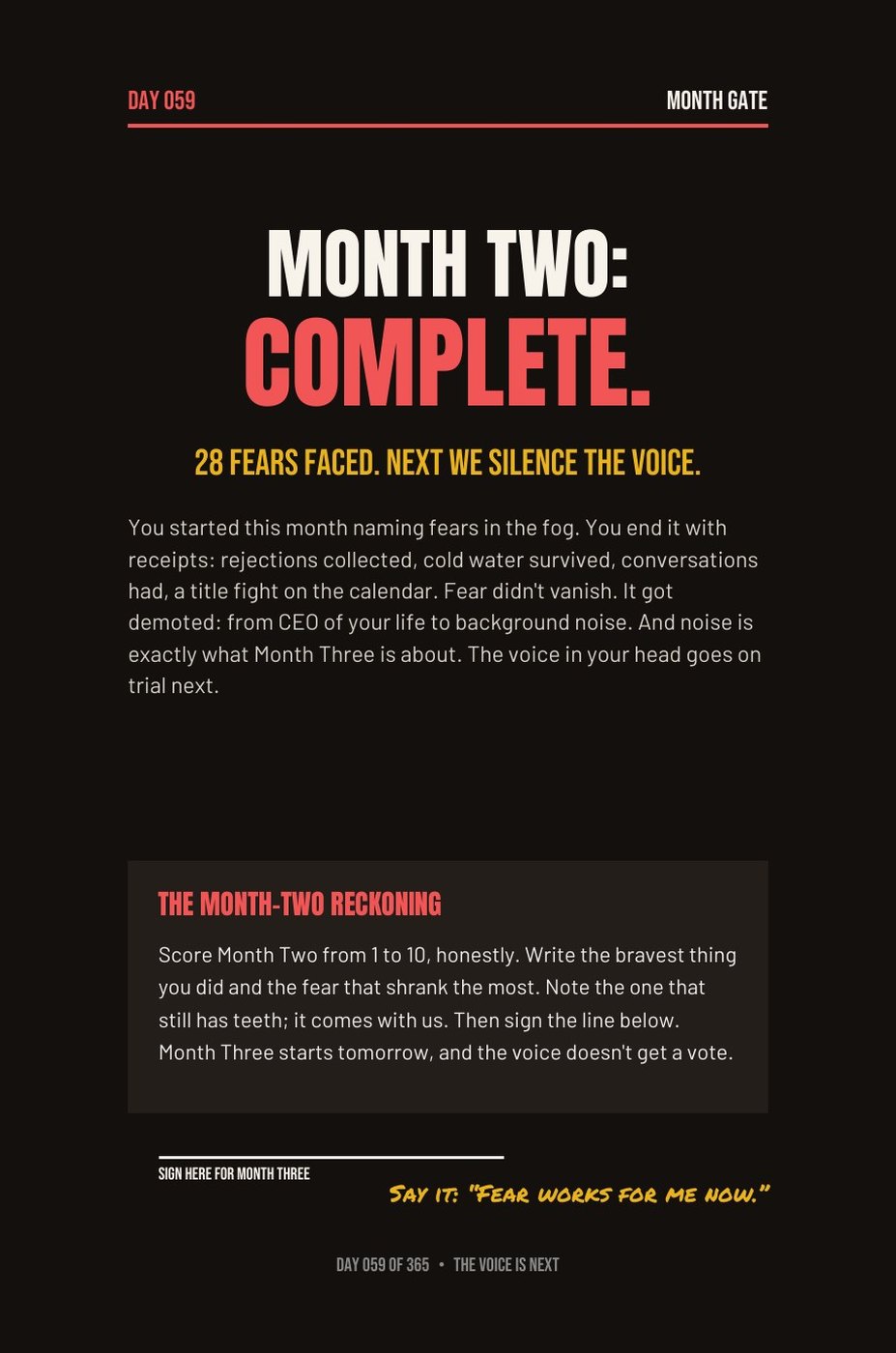
Dated pages beat streaks
Streak counters reset to zero and take your motivation with them. A dated page does something smarter: the missed day stays visible, but the next page is still right there. The record is honest without being fatal.
Miss never twice
Missing one day is a data point. Missing two is a direction. The comeback rule in the books is deliberately boring: next page, same fire, no drama. Nobody relives the miss; the mirror keeps score anyway.
Score the month, not the day
Daily self-judgment burns people out. The books end every month in a gate: count the missions completed, answer for the dodged ones, sign it, turn the page. Twelve honest checkpoints beat 365 anxious ones.
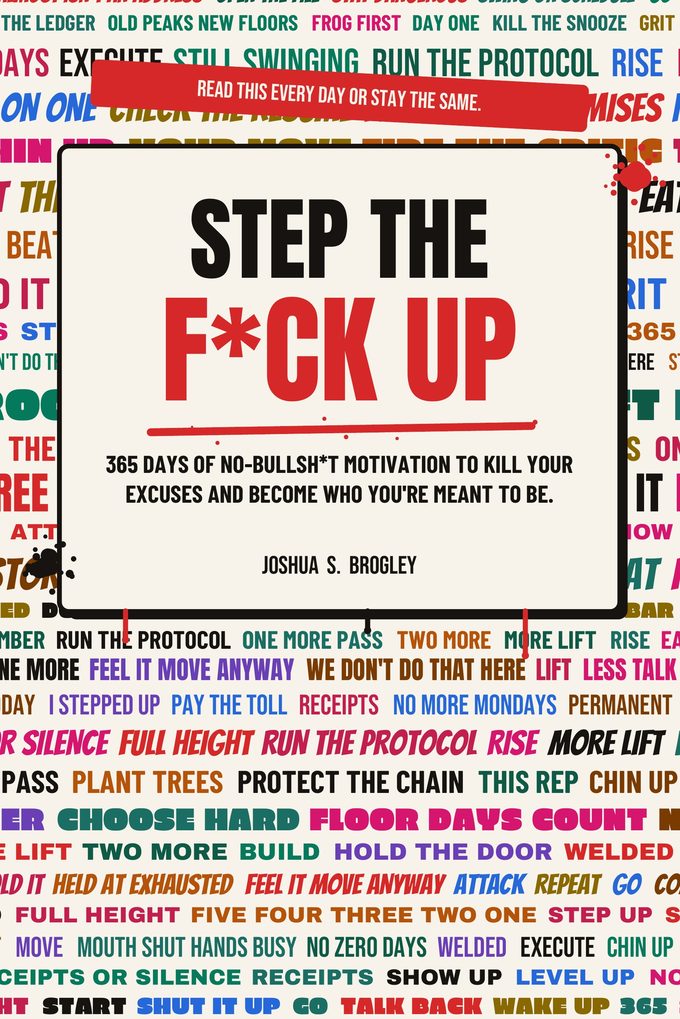
Step The F*ck Up
One truth, one mission, one line out loud. 365 dated pages. The streak is not the point. The comeback is.
Why do I always quit habits after two weeks?
Because the habit was too big and the misses were invisible. Two-minute daily reps with a dated record survive the motivation dip that kills week three.
Is a paper book better than a habit app?
A dated page you physically turn beats a notification you swipe away. Paper cannot be muted, and the unturned page sits there, keeping receipts.
written by the author, at the kitchen table, after work.